SPEAKERS
University of Genoa — Italy
- Solving polynomial systems with Gröbner bases Many problems arising in cryptography can be modeled by systems of multivariate polynomial equations over a finite field. It is therefore important to understand how to solve such systems efficiently. Gröbner bases provide a fundamental tool for this purpose. In the first part of these lectures, we review and explain the connection between polynomial system solving and Gröbner bases, introducing important notions such as the Macaulay matrix. In the second part, we introduce the notions of solving degree, last fall degree, and degree of regularity, which are commonly used to study the complexity of polynomial systems arising in cryptography.
TII — Abu Dhabi, UAE
- How Fully Homomorphic Encryption became (somehow) practical This talk provides an overview of the evolution of Fully Homomorphic Encryption (FHE), starting from the beginning and following the major ideas that transformed FHE from a theoretical breakthrough into a practical technology. We discuss the key innovations introduced over the years, including bootstrapping, modulus switching, key switching, and packing techniques, highlighting the challenges each was designed to address. The lecture concludes with a comparison of the main FHE families used today, discussing their strengths, limitations, and typical application scenarios.
- Noise Growth and Parameter Selection in Fully Homomorphic Encryption Selecting cryptographic parameters is one of the central challenges in Fully Homomorphic Encryption. This lecture focuses on the relationship between parameters, security, correctness, and computational efficiency through the lens of noise analysis. We introduce the main sources of noise growth in homomorphic computations, explain how different operations affect the noise budget, and discuss how parameter choices determine the achievable computation depth. The lecture also illustrates the trade-offs involved in practical parameter selection and provides the intuition needed to analyze and optimize FHE circuits.
University of Bergen / Simula Lab — Norway
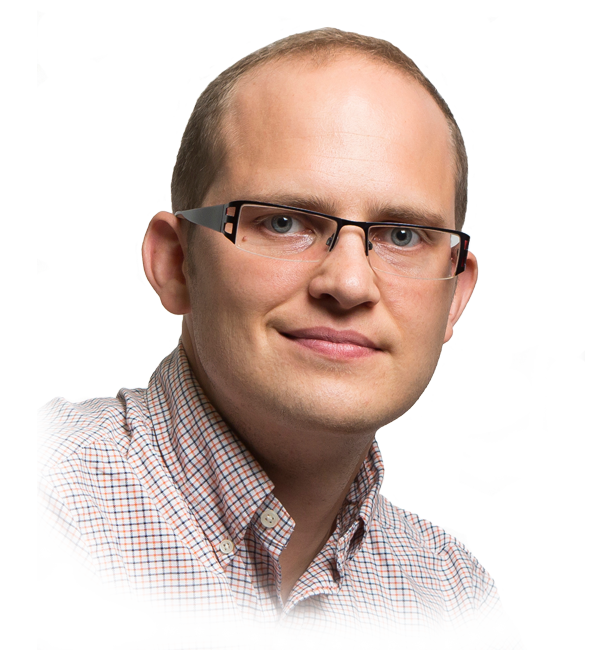
University of Edinburgh — Scotland
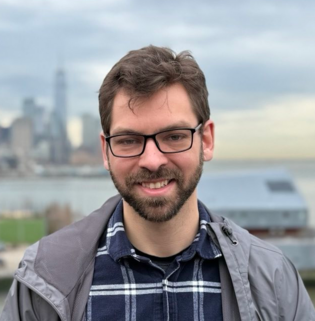
PROGRAM
Tuesday, 01.09
14:00 – 14:30
Registration
14:30 – 14:45
Opening Remarks
14:45 – 15:45
Alessio Caminata
15:45 – 16:00
Short break
16:00 – 17:00
Alessio Caminata
Wednesday, 02.09
9:00 – 10:00
Leo Perrin
10:00 – 11:00
Leo Perrin
11:00 – 11:30
Coffee Break
11:30 – 12:30
Morten Øygarden
12:30 – 14:00
Lunch Break
14:00 – 15:00
Morten Øygarden
15:00 – 16:00
Chiara Marcolla
16:00 – 16:30
Coffee Break
16:30 – 17:30
Discussion
Thursday, 03.09
9:00 – 10:00
Chiara Marcolla
10:00 – 11:00
Scott Griffy
11:00 – 11:30
Coffee Break
11:30 – 12:30
Markulf Kohlweiss
12:30 – 14:00
Lunch Break
14:00 – 15:00
Student Presentations
15:00 – 16:00
Student Presentations